
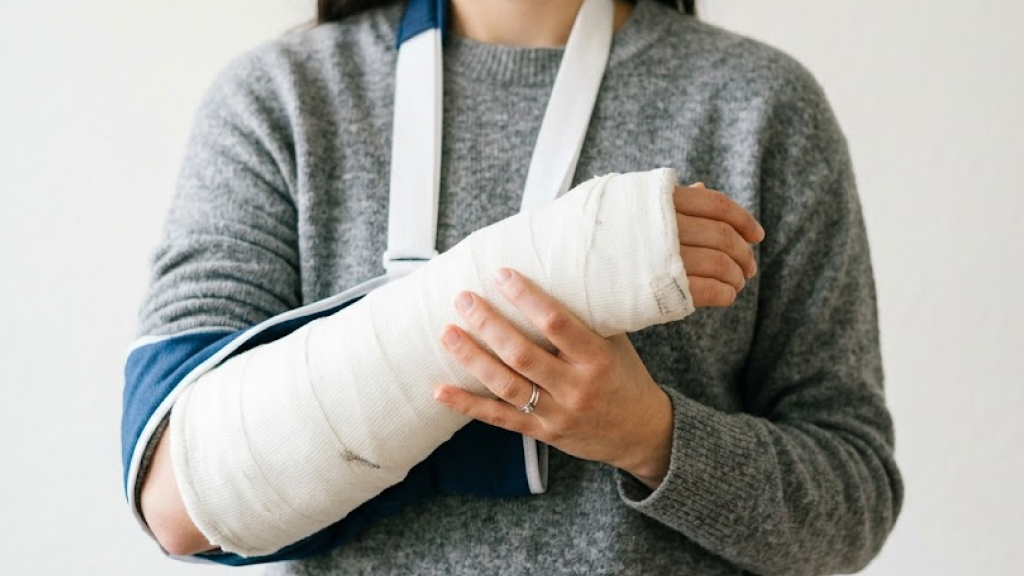
Recovery is often measured by medical progress. But for many people, the greatest challenges begin after leaving the hospital.
Drawing from my own experience recovering from a serious wrist injury, this presentation explored recovery through the lens of service design. Rather than focusing on treatment itself, it examined how everyday interactions become unexpectedly difficult when accessibility is overlooked.
Presented at Service Design Day 2026, the talk invited designers to rethink disability not as a medical condition, but as the gap between a person’s abilities and the services surrounding them.
01. About the Event
Service Design Day 2026 was organized by Service Design ID, bringing together practitioners and designers to share how service design shapes products, services, and everyday experiences.
Held simultaneously across four Indonesian cities, the event featured a series of Pecha Kucha presentations, where each speaker delivered a talk in just 20 slides × 20 seconds. The Jakarta session took place at CGV FX Sudirman, attended by approximately 130 participants from diverse backgrounds, including product designers, accessibility advocates, and service design practitioners.
02. The Idea
Several presentation topics were considered before I chose The Neglected Side of Recovery.
The idea came from witnessing how people around me including myself struggled to adapt after becoming temporarily disabled due to injury. While medical treatment focused on physical recovery, many daily challenges received little attention. Simple activities became difficult, yet few people understood that disability is often defined not by the injury itself, but by the barriers surrounding it.
Preparing the talk took about a week. Since the presentation followed the Pecha Kucha format, every slide needed to communicate a clear idea in just 20 seconds. Rather than relying on service design frameworks, I focused on storytelling to make the experience relatable to audiences from different backgrounds.
![[GANTI INI: deskripsi gambar yang informatif]](https://andiastika.com/wp-content/uploads/2026/07/02-SDID-1.jpg
)
03. The Presentation
The presentation was intentionally designed as a story rather than a case study. By combining personal experience with service design thinking, I wanted to demonstrate how accessibility extends beyond interfaces into everyday services and human interactions.
The recording below captures the complete presentation as delivered during Service Design Day 2026.
04. Key Insights from the Talk
Although the presentation centered on a personal experience, the message extended beyond recovery itself.
Some of the key ideas shared during the session included:
Recovery continues long after medical treatment. Better services should support people as they adapt to everyday life beyond the hospital.
Recovery isn’t only about healing an injury. Many daily challenges emerge from how people interact with products, services, and their surroundings.
People’s limitations are often influenced by their surroundings. Inclusive environments enable independence, while inaccessible ones create unnecessary barriers.
05. Reflection
This presentation reminded me that some of the most meaningful design opportunities come from everyday experiences.
It also reinforced my belief that service design should help us notice what is often invisible. By sharing a personal story, I hoped to encourage more conversations about accessibility and inspire designers to create services that support people through every stage of recovery not just the medical one.
One of the most rewarding moments came after the session, when several attendees approached me to continue discussing accessibility. Knowing that the talk sparked new conversations reaffirmed the value of bringing this often-overlooked topic into the broader design community.
"Service Design should help us notice what is often invisible"
Interested in Accessibility and Service Design?
Let’s explore how inclusive thinking can create better experiences for everyone.